Putting furniture into storage is often a practical decision when moving homes, travelling abroad or renovating a property. However, when a sofa remains unused for several months or even years, it may not come out of storage in the same condition it went in.
Flattened cushions, unpleasant smells, faded fabric and weakened wooden frames are some of the problems homeowners may discover when bringing their furniture back.
Dubai’s climate can make furniture storage particularly challenging, especially when temperature fluctuations, humidity and inadequate ventilation affect the storage environment.
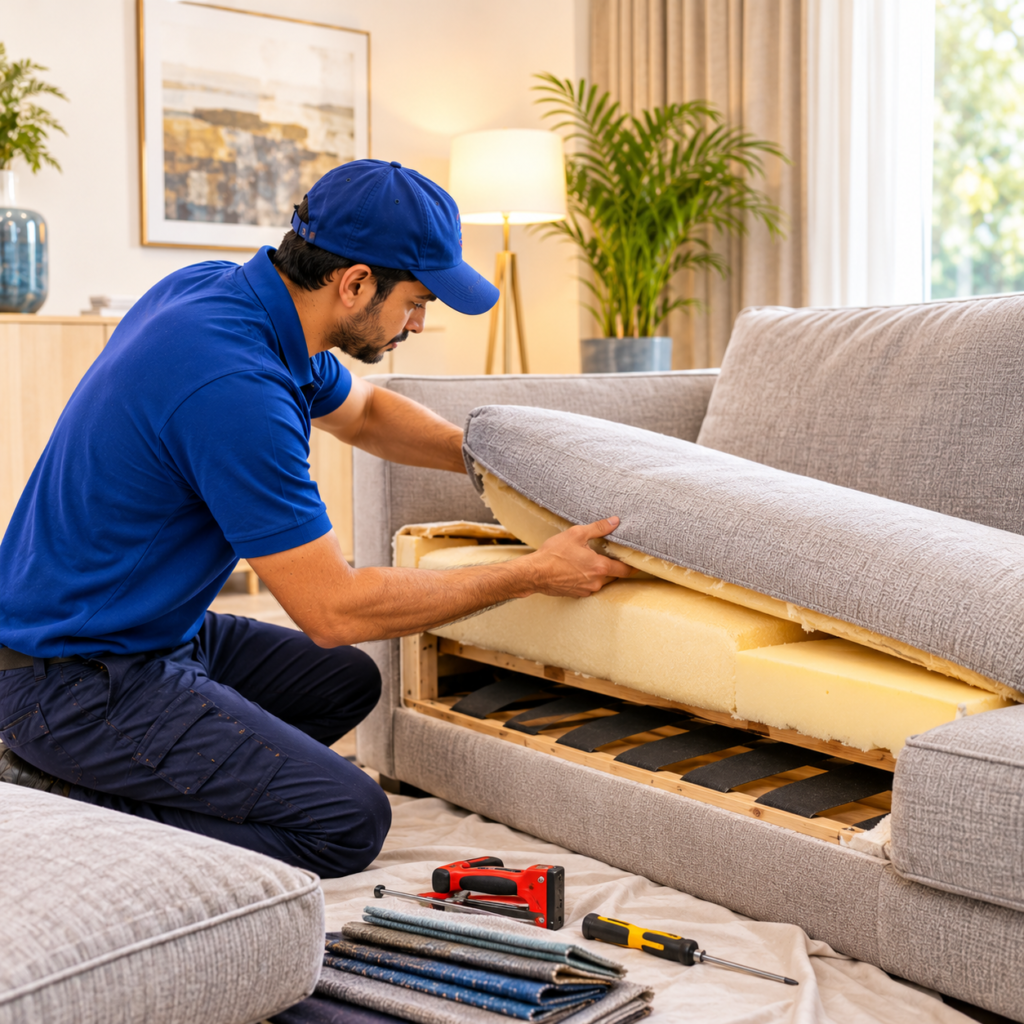
The good news is that a sofa that has deteriorated during storage does not always need replacing. Professional sofa reupholstery in Dubai can help restore worn materials, replace damaged cushioning and improve the appearance of furniture that is still structurally sound.
Here is what happens to a sofa during long-term storage and what can be done to restore it.
Why Does a Sofa Deteriorate During Long-Term Storage?
Many people assume that furniture remains protected simply because it is not being used. Unfortunately, storage conditions can have a significant impact on its condition.
Poor ventilation, moisture, dust and unsuitable protective coverings can gradually damage different sofa components.
For example, a sofa stored in a humid environment may develop mould or mildew, while prolonged exposure to heat can affect certain foam materials, adhesives and upholstery finishes.
Even when a storage facility is clean, improper wrapping or placing heavy objects on top of furniture can cause permanent deformation.
Understanding these issues is the first step towards deciding whether your sofa needs professional repair or complete restoration.
What Happens to Sofa Foam During Storage?
Foam is one of the most important components determining how comfortable a sofa feels.
Over time, certain foam materials can lose resilience, particularly when exposed to unsuitable temperatures or prolonged compression.
If heavy objects have been placed on the sofa during storage, the cushions may develop flattened areas or lose their original shape.
When you bring the sofa home, check whether the cushions return to their normal shape after being removed from compression. Also look for uneven surfaces, crumbling foam or signs of deterioration.
If the cushioning has become permanently compressed, replacing the foam may be the most effective solution.
During sofa reupholstery in Dubai, an experienced upholsterer can assess the existing cushioning and recommend suitable replacement foam based on the sofa’s construction and your comfort preferences.
Can Wooden Sofa Frames Get Damaged in Storage?
The frame provides the foundation for your sofa, and its condition is particularly important when considering restoration.
Wooden frames can be affected by prolonged exposure to moisture. Depending on the material and storage conditions, this may cause swelling, warping, weakened joints or deterioration.
Wooden components may also become damaged if furniture is stored under excessive weight or handled incorrectly during transportation.
Before restoring the upholstery, inspect the sofa for loose joints, unusual noises, uneven seating and visible structural damage.
A professional furniture repair specialist can assess whether the frame requires reinforcement, replacement components or more extensive repairs.
If the underlying structure remains strong, restoring the sofa may be considerably more economical than buying a replacement.
What Happens to Upholstery Fabric and Leather?
Upholstery can deteriorate even when the sofa is not being used.
Fabric sofas may accumulate dust, develop musty odours or experience discolouration due to unsuitable storage conditions. Natural fibres can be particularly sensitive to moisture and prolonged exposure to damp environments.
Leather sofas have their own challenges. Depending on the type of leather and storage conditions, the material may become dry, stiff, cracked or discoloured.
In some cases, professional cleaning and appropriate conditioning may improve the appearance. However, deeply damaged, mould-affected or deteriorated upholstery may need replacing.
Professional sofa reupholstery in Dubai offers an opportunity to replace the existing covering with a fresh material while retaining the original furniture structure wherever possible.
How to Deal with Mould and Unpleasant Odours
One of the most concerning problems with stored furniture is mould.
If a sofa has been kept in a damp or poorly ventilated environment, mould may develop on the upholstery, inside the cushions or around the wooden frame.
Visible mould, persistent musty smells and damp padding should never be ignored.
Avoid simply covering the affected areas with new fabric or using fragrance sprays to hide unpleasant odours. These approaches do not address the underlying contamination.
For significant mould growth, seek professional assessment and specialist cleaning advice. Porous materials that are extensively contaminated may need to be discarded.
Reupholstery should only be considered once the furniture has been confirmed safe and completely dry.
When Is Sofa Reupholstery Worth Considering?
Not every sofa damaged during storage needs to be replaced.
If the frame is strong but the cushions have flattened, and the upholstery looks worn, restoration may be a practical option.
Sofa reupholstery in Dubai can help homeowners:
- Replace old or compressed foam.
- Renew faded, torn or damaged upholstery.
- Restore worn back and seat cushions.
- Repair suitable structural components.
- Update the sofa’s appearance with modern fabrics and colours.
- Extend the usable life of quality furniture.
This can be particularly worthwhile for expensive, custom-made or sentimental sofas that would be difficult to replace.
However, if the frame is severely damaged or the furniture has extensive mould contamination, replacement may be the safer and more economical choice.
How to Prepare Your Sofa Before Returning It to Use
Before bringing a stored sofa back into your living room, inspect it thoroughly.
Remove protective covers and check for moisture, mould, insects and visible damage. Allow the furniture to air in a clean, well-ventilated environment if it is confirmed to be safe.
Check the cushions, frame, legs and upholstery before using the sofa regularly.
If you notice persistent odours, visible mould or structural instability, arrange a professional inspection rather than attempting a quick cosmetic fix.
Give Your Stored Sofa a Fresh Start
Long-term storage does not necessarily mean the end of your favourite sofa. Although foam, frames and upholstery can deteriorate over time, many problems can be addressed through appropriate repair and restoration.
With professional sofa reupholstery in Dubai, homeowners can replace worn cushioning, refresh damaged fabrics and restore suitable furniture without automatically investing in an entirely new sofa.
The key is to assess the storage-related damage before deciding on the next step.
Whether your sofa needs new foam, structural repairs or a complete upholstery makeover, the right restoration approach can help bring it back into your home looking refreshed and feeling comfortable. Get in touch with
Sofa Palace and restore your old sofa to give it a new lease of life.