
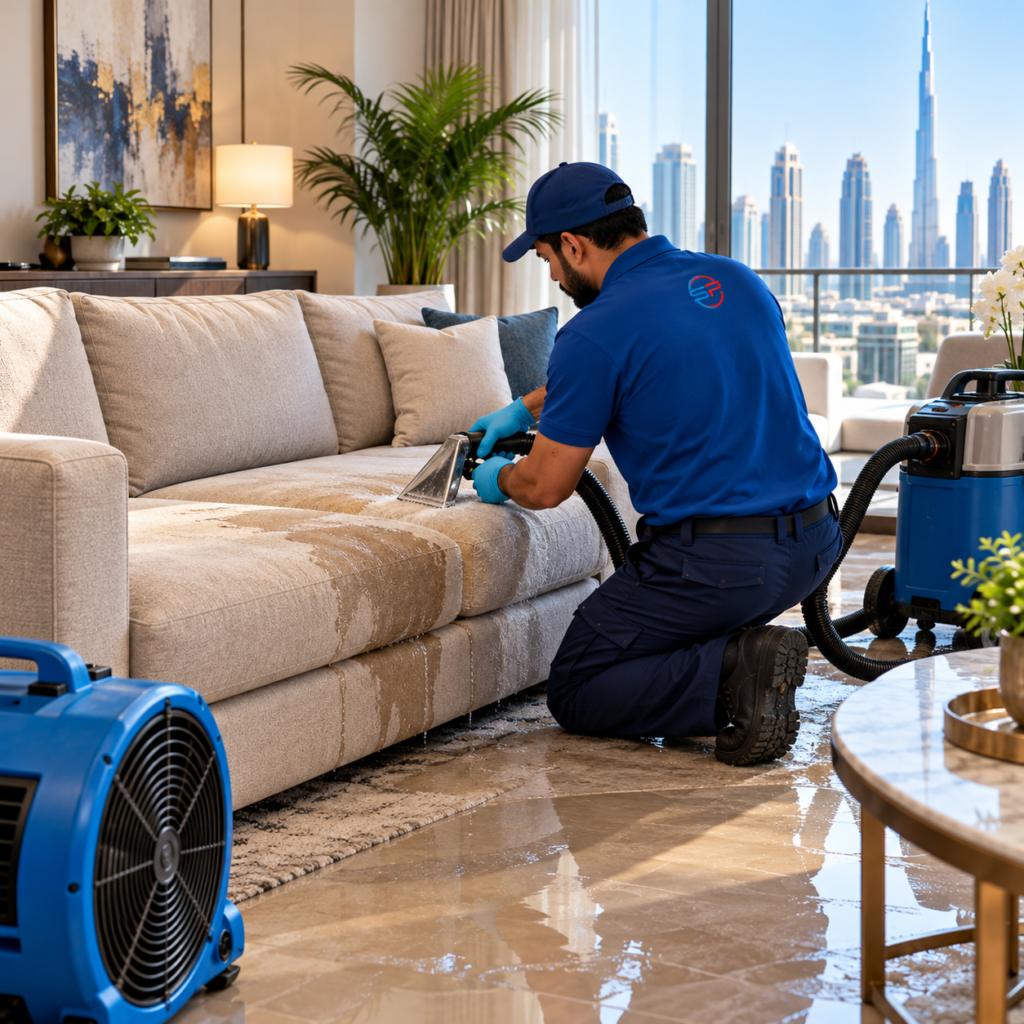
Imagine returning home to discover that a leaking pipe, overflowing air-conditioning unit or unexpected flooding has soaked your favourite sofa. What was once a comfortable centrepiece of your living room is now damp, stained and potentially damaged beneath the surface.
Water damage can be particularly frustrating because its effects are not always immediately visible. While the upholstery may appear slightly wet, moisture can penetrate deep into the foam, padding and wooden frame.
Fortunately, not every water-damaged sofa needs to be discarded. Professional sofa reupholstery in Dubai may help restore certain components, replace damaged materials and give your furniture a second life.
The important question is knowing what can safely be repaired and when replacement is the better option.
What Happens When Water Damages a Sofa?
A sofa contains several layers of materials, each reacting differently to moisture.
Fabric upholstery can absorb water, resulting in stains, discolouration and unpleasant odours. Foam cushions may retain moisture long after the surface appears dry, while wooden frames can swell, warp or weaken.
Metal springs and fittings may also develop corrosion when exposed to moisture for extended periods.
Another concern is mould growth. Damp upholstery and padding can provide conditions for mould to develop, particularly when moisture remains trapped inside the furniture.
The extent of damage depends on how much water entered the sofa, how long it remained wet and whether the water was clean or contaminated.
First Steps After Discovering Water Damage
Acting quickly can improve the chances of saving your furniture.
Start by identifying and stopping the source of water, provided it is safe to do so. Move the sofa away from the affected area if possible and prevent further exposure.
Remove detachable cushions and covers to encourage airflow. If the water came from a clean source, such as a supply pipe, prompt professional drying may help limit damage.
However, avoid using the sofa while it remains wet. Do not attempt to dry internal components using excessive heat, as this can damage certain fabrics, adhesives and foam materials.
If the sofa has been exposed to sewage, floodwater or other potentially contaminated water, avoid handling it unnecessarily and seek specialist advice before attempting restoration.
Can Water-Damaged Upholstery Fabric Be Saved?
The answer depends on the fabric type, water source and extent of exposure.
Some synthetic upholstery fabrics may tolerate controlled cleaning and drying better than delicate materials. However, fabrics that develop permanent stains, shrinkage or persistent odours may need replacing.
Materials such as velvet, silk blends and certain natural fibres can be particularly sensitive to moisture and inappropriate cleaning methods.
Professional sofa reupholstery in Dubai provides an opportunity to replace damaged fabric while retaining suitable parts of the existing furniture.
An upholsterer can also help you select a durable, easy-to-maintain material that complements your interior.
What About the Foam and Cushion Padding?
Foam is often one of the most challenging components to restore after significant water exposure.
Because cushions contain porous materials, moisture can become trapped inside even when the outer fabric feels dry.
If the foam was briefly exposed to clean water, a specialist may be able to assess whether thorough drying is practical. However, prolonged saturation, contamination or visible mould can make replacement necessary.
Simply fitting fresh fabric over damp foam does not solve the underlying problem.
When arranging sofa reupholstery in Dubai, ask the upholsterer to inspect the cushioning carefully and recommend replacement where appropriate.
Fresh foam can also help restore comfort, support and the original shape of your sofa.
Can a Water-Damaged Sofa Frame Be Repaired?
The frame is one of the most important factors when deciding whether restoration is worthwhile.
Solid wooden frames may sometimes be recoverable after limited exposure to clean water, provided they are properly dried and remain structurally sound.
However, swelling, warping, splitting, or weakened joints can affect stability. Particleboard and certain engineered wood components may deteriorate significantly after becoming saturated.
Metal frames and springs should also be inspected for corrosion.
A professional assessment can determine whether individual components can be repaired or whether structural damage makes the sofa unsuitable for continued use.
When Is Sofa Replacement the Safer Option?
Although restoration can be worthwhile, some water-damaged sofas are beyond practical repair.
Replacement may be the better choice when:
- The sofa has been saturated with sewage or contaminated floodwater.
- Extensive mould growth is present inside the upholstery or cushioning.
- The frame has become severely warped or structurally unstable.
- Persistent odours remain despite appropriate professional treatment.
- Repair costs approach or exceed the price of a comparable replacement.
Water contamination is particularly important. Porous furniture exposed to sewage or floodwater may be unsafe to retain, even if the visible upholstery appears recoverable.
In such situations, consult a qualified water-damage restoration specialist rather than relying on cosmetic upholstery repairs.
How Professional Reupholstery Can Help
For sofas affected by limited, clean-water damage, reupholstery can be part of an effective restoration process.
Once the furniture has been assessed and any moisture or contamination issues have been properly addressed, damaged fabric, foam and other replaceable components can be renewed.
Professional sofa reupholstery in Dubai can also provide an opportunity to update the sofa’s appearance with new colours, textures and cushioning.
However, upholstery work should only begin once the furniture is confirmed to be sufficiently dry and suitable for restoration.
Protecting Your Sofa from Future Water Damage
Prevention is always preferable to dealing with costly furniture repairs.
Regularly inspect nearby plumbing, air-conditioning drainage systems and windows for leaks. Avoid placing upholstered furniture directly beneath units that may develop condensation or drainage problems.
If your home experiences a leak, address the moisture promptly and arrange professional assistance when necessary.
Maintaining appropriate indoor humidity and ensuring adequate ventilation can also help reduce prolonged dampness.
Give Your Sofa a Second Chance When It Is Safe to Do So
Water damage does not automatically mean your sofa belongs in the bin. In some cases, replacing damaged upholstery and cushioning can restore a well-built piece of furniture.
However, successful restoration begins with understanding the source and extent of the damage.
With professional sofa reupholstery in Dubai, homeowners can explore practical restoration options while preserving furniture that remains structurally sound and safe to use.
Before investing in repairs, have the sofa properly inspected, address any moisture or contamination concerns and compare restoration costs with replacement.
A beautiful sofa is worth restoring, but a safe, dry and comfortable living environment should always come first.