
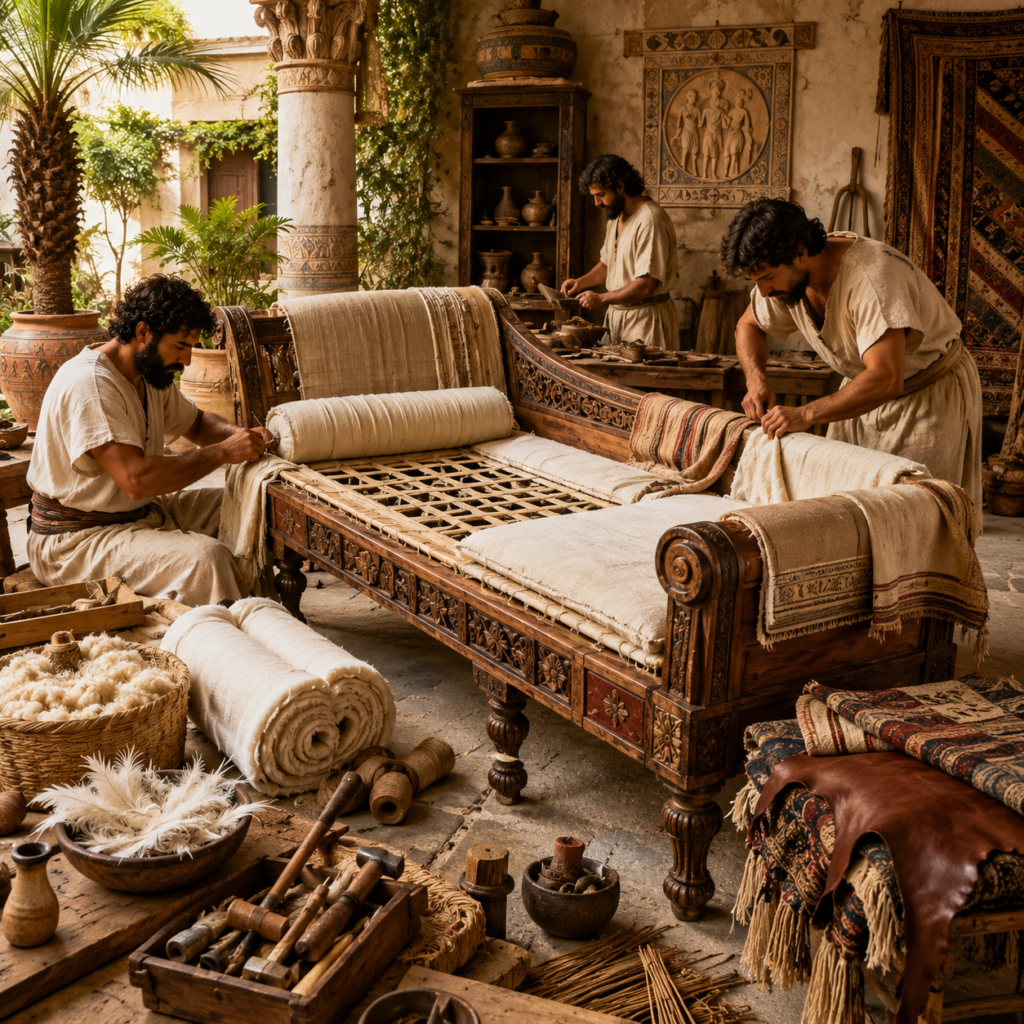
When we think about sofas today, we picture soft cushions, durable fabrics, supportive foam and beautifully finished frames. Modern sofa upholstery services can completely transform an ageing sofa by replacing worn fabric, repairing padding and restoring its structure. However, the idea of making seating more comfortable and attractive is thousands of years old.
Ancient civilisations did not have sofas exactly as we know them today, but they used couches, benches, daybeds and reclining seats that served similar purposes. From woven Egyptian cushions to luxurious Roman couches, the history of upholstery reveals how comfort, craftsmanship and decoration gradually evolved into the furniture-making techniques we use today.
Upholstered Furniture in Ancient Egypt
Ancient Egypt provides some of the earliest surviving examples of sophisticated furniture craftsmanship. Wealthy Egyptians used chairs, stools, beds and couches made from wood, often decorated with carvings, ivory, precious metals and painted details.
Unlike today’s thickly padded furniture, Egyptian seating was generally firm. Comfort was added using woven mats, animal skins, linen coverings and removable cushions. Linen was particularly important because flax was widely cultivated in ancient Egypt.
Cushions could be filled with natural materials such as plant fibres, wool or other soft materials available at the time. Instead of permanently attaching layers of foam and fabric to furniture frames, as modern sofa upholstery services often do, ancient Egyptians depended heavily on loose textiles and padded coverings.
For the wealthy, furniture was also a symbol of status. Decorative fabrics and carefully finished wooden frames demonstrated the owner’s social position.
How the Ancient Greeks Added Comfort
The ancient Greeks developed a famous piece of furniture known as the kline. It was a raised couch used for reclining, eating, socialising and sometimes sleeping.
A kline usually had a wooden or metal frame and could be made more comfortable with mattresses, blankets and cushions. Wealthier households used finely woven textiles featuring decorative patterns.
The Greeks understood an idea that remains central to modern upholstery: a hard furniture structure becomes much more comfortable when combined with layers of softer materials.
Rather than the fully upholstered sofas we see today, Greek couches relied mainly on removable cushions and textile coverings. Nevertheless, the basic principle behind today’s sofa upholstery services was already present—combining structural furniture with softer materials to improve comfort and appearance.
Roman Couches Became More Luxurious
The Romans adopted many furniture traditions from the Greeks and developed them further.
One popular piece of Roman furniture was the lectus, a type of couch or reclining bed used for sleeping, reading, relaxing and dining. Wealthy Romans often reclined on couches during elaborate banquets.
Roman couches could feature wooden, bronze or decorated frames combined with mattresses, cushions and blankets. Wool, linen and leather were among the materials used in Roman domestic furnishings.
In wealthy homes, textiles became an important decorative feature. Bright colours, patterned fabrics and luxurious cushions helped transform furniture into a display of prosperity.
The Romans therefore moved closer to the concept of decorative upholstery: furniture was not simply functional—it contributed to the visual character of the home.
What Did Ancient Upholsterers Use for Padding?
Ancient craftsmen obviously did not have polyurethane foam, synthetic fibres or mechanical springs.
Instead, furniture comfort depended on natural materials. Depending on the civilisation, region and period, padding or soft furnishings could involve materials such as:
- Wool
- Linen
- Animal hides
- Feathers
- Plant fibres
- Woven reeds or grasses
- Stuffed cushions and mattresses
These materials required considerable manual work. Fabrics had to be spun, woven and sometimes dyed by hand before being used for furnishings.
Modern sofa upholstery services have access to high-density foam, webbing, springs, specialised adhesives and performance fabrics. Ancient craftsmen had fewer materials, but they relied heavily on skill and creativity.
From Ancient Couches to the Modern Sofa
The furniture we call a sofa developed much later than the ancient Greek or Roman couch.
Across the Middle East, long cushioned seating arrangements and divans became an important part of domestic interiors. The word “sofa” itself ultimately has roots connected with Middle Eastern seating traditions.
In Europe, upholstered furniture became increasingly elaborate between the Renaissance and the 17th and 18th centuries. Craftsmen began attaching padding and fabric more permanently to wooden frames.
Materials such as horsehair, wool, feathers and natural fibres were used underneath decorative fabrics. Upholstery gradually became a specialised craft rather than simply the practice of placing cushions on wooden furniture.
The Industrial Revolution eventually introduced new manufacturing methods, springs and mass-produced textiles, paving the way for the modern sofa.
What Modern Sofa Upholstery Services Have Inherited
Although today’s upholsterers use completely different materials and equipment, the fundamental objectives remain surprisingly similar to those of ancient furniture makers.
Professional sofa upholstery services still focus on three essential elements: comfort, durability and appearance.
An upholsterer may remove old fabric, repair the wooden structure, replace damaged webbing or springs, install new foam and apply a new upholstery material. The result can give an old sofa an entirely new appearance while preserving its original frame.
This reflects a very old tradition. For thousands of years, people have adapted furniture using textiles, padding and decorative materials instead of simply discarding it.
Ancient Craftsmanship Still Inspires Modern Interiors
The history of upholstery shows that our desire for comfortable and attractive furniture is nothing new. Ancient Egyptians used linen and cushions, Greeks relaxed on padded klines, and Romans decorated their couches with luxurious textiles.
The materials have changed dramatically, but the purpose has remained remarkably consistent.
Modern sofa upholstery services represent the latest stage in this long history of furniture craftsmanship. Today, homeowners can choose from hundreds of fabrics, colours, textures and cushioning materials while benefiting from techniques refined over generations.
From ancient woven cushions to contemporary designer fabrics, upholstery continues to combine practicality with creativity—proving that the human desire to sit comfortably and beautifully has existed for thousands of years.